
Emergency Response
When Everything Fails, This System Doesn’t.

When a disaster hits, most families have the same experience:
No power. No water. No information. No idea when help is coming.
The Corridor was built to change that.
Imagine a fire sweeping through a region or a flood wiping out roads. A family, scared and exhausted, taps a button on their phone — or uses a neighbor’s if theirs is dead — and connects instantly with the Corridor Emergency Team.
Within minutes, the system wakes up.
Power stays on at Corridor facilities because they run on their own renewable microgrids. Water from rain capture, greywater recovery, and desalination sites is already cleaned, stored, and ready to move — not in plastic bottles, but in reusable cups and bottles manufactured by the textile division.
Those same textile sites switch into “emergency mode,” producing climate-specific survival gear:
• heat-resistant clothing for fire zones
• quick-dry warmth for flood regions
• cold-shield gear for freeze events
All designed so that even if someone has no shelter at all, they can stay alive.
Agricultural centers pack ready-to-eat meals. Cold-chain trucks and drones protect critical medicine. The media division pushes out simple, calming updates:
“Your first survival kit is on the way. Here’s what’s inside. Here’s how to stay safe until it arrives.”
Once basic needs are met, Phase 2 begins. Survivors send a quick phone scan, and the Corridor produces custom-fitted clothing and gear based on their body shape and the environment they’re living in. These personalized recovery kits arrive around Day 7, giving people a bit of dignity, control, and comfort in the middle of chaos.
Every worker across the Corridor — from childcare to manufacturing to logistics — steps into trained emergency roles.
No one is left behind.
No community is left waiting.
And no family wonders if help is coming — they see it, track it, and feel it.
This is what it looks like when a multi-state system acts like one beating heart.
The NY Mother & Kids
A Mom Without Options Finally Gets One.
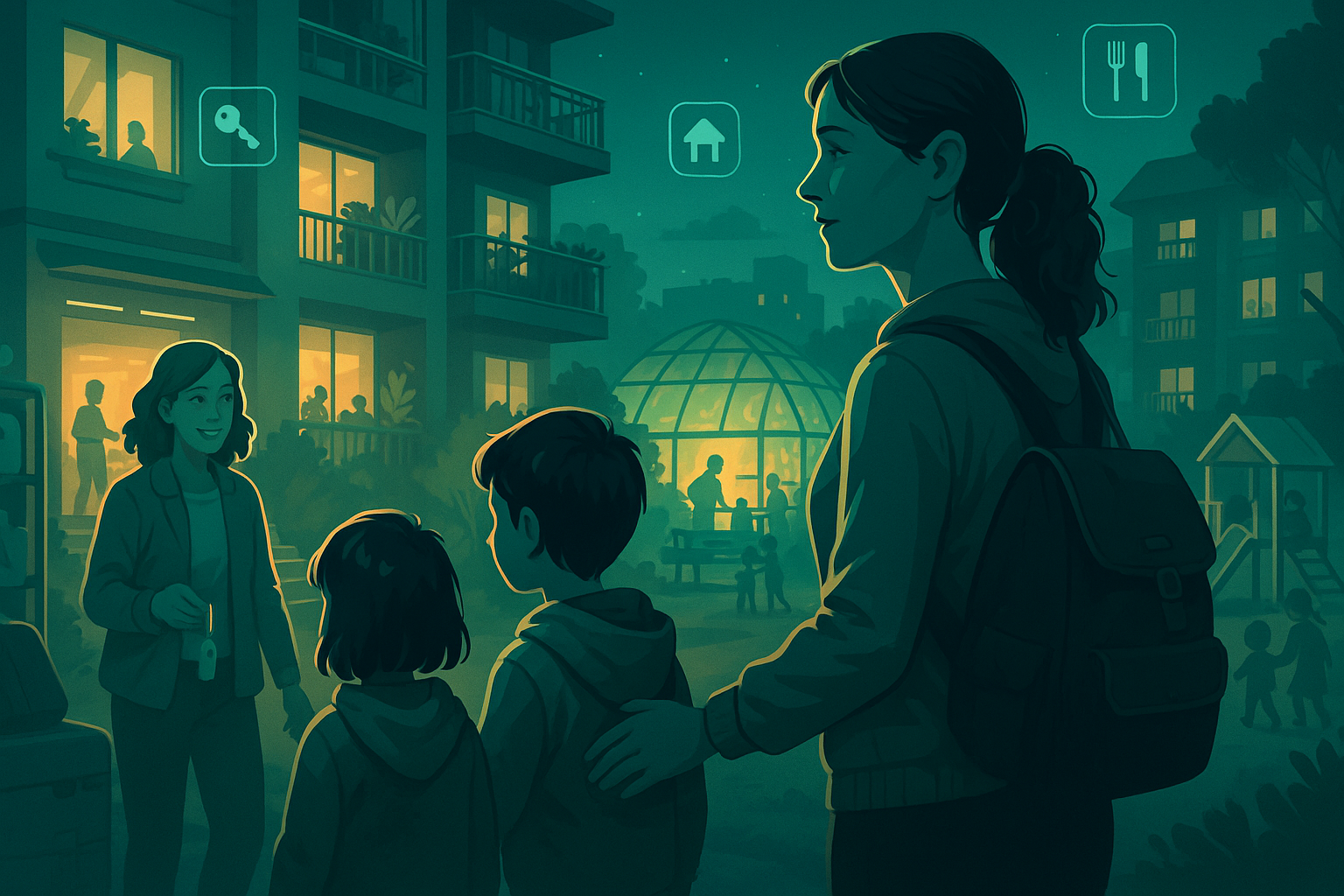
A mother in New York loses everything at once: her job, her home, her health, and the fragile stability she fought so hard to hold onto. She’s smart. She’s capable. But the world doesn’t always reward those things.
Then she gets a call.
New Hampshire has an opening in a multi-state program that helps families rebuild their lives — not with handouts, but with real pathways to stability, skills, and choice. She accepts. She packs one bag for herself and one for her two young children. They arrive the next day.
Instead of a shelter or a temporary motel, she’s handed a key to a clean, safe multi-family residence where every floor has greenhouse-grown produce, prepared meals, stable childcare, and built-in support for workers starting over. Her kids are enrolled in childcare within an hour. She starts a paid apprenticeship the next morning.
No debt.
No waiting lists.
No bureaucracy maze.
Her training hours count toward something called the Workforce Equity Escrow — a savings system that grows every year she works or learns. After five years, she wants to return to New York, but her savings aren’t enough. Instead of being trapped, she pivots into a new field inside the Corridor — higher-paying, more stable. Her children grow up surrounded by media labs, cultural exchange programs, reliable schools, and a community of adults who tell them, “You’re safe now. You can build something.”
Her oldest, once a frightened six-year-old, is now a teenager with real media and digital-security experience. He returns to New York ready to step into an apprenticeship of his own. Her youngest dreams of California’s tech-and-arts track — something he never would have imagined ten years ago.
By the time she’s ready to move home, she finally has enough:
• enough saved for a down payment in New York
• enough to buy into a local Corridor-run business
• enough confidence to start a new chapter on solid ground
She returns not as a displaced mother, but as a homeowner, a trained professional, a business stakeholder — and someone whose children now expect stability, not chaos.
The Corridor didn’t just help her survive.
It helped her re-enter her life — transformed.
NH Community & EnergyBox Innovation
A Town That Used to Go Dark Learns How to Shine.
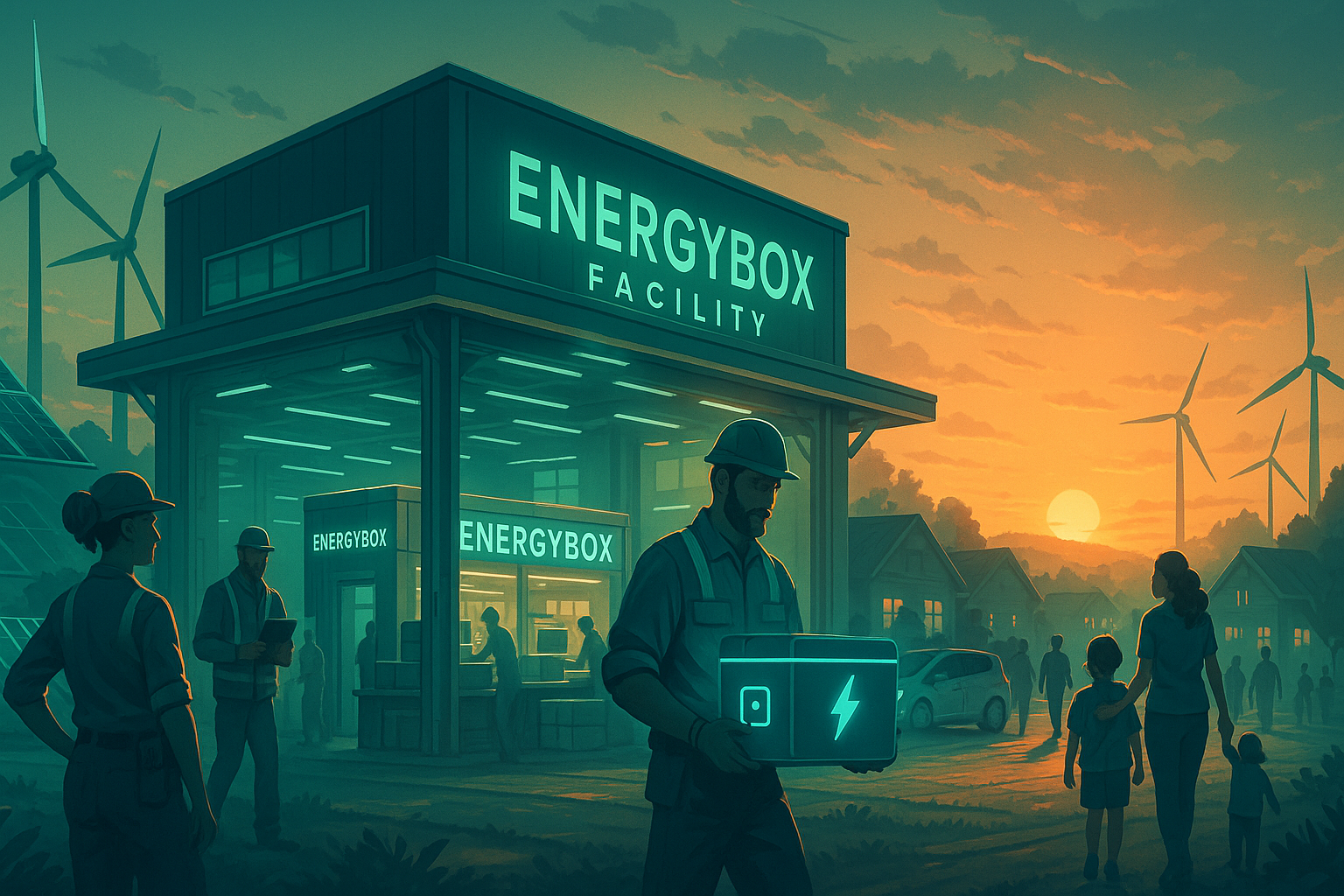
There’s a town in New Hampshire where the power goes out if the wind sighs too loudly. People joke about it, but deep down everyone knows it’s not funny. Losing electricity means losing heat, food, safety, and sometimes even income.
Then the Corridor builds a clean-power site on the edge of town — nothing flashy at first. Just solar panels, wind turbines, geothermal wells, and a small building most people drive past without noticing.
But inside that building, everything changes.
The town now sits on top of its own microgrid, meaning when storms hit or a transformer fails, the lights in this town stay on. More than that, the microgrid powers a new manufacturing center producing something new:
The EnergyBox.
A small, sleek, fully enclosed power unit that comes in four sizes:
• XS — for cars and small devices
• S — for a room or small studio
• M — for a full home
• L — for an entire business or emergency site
People buy them for outages, for winter storms, for camping, or simply because electricity bills spike. And in New Hampshire, owning one qualifies families for alternative-energy discounts — an immediate financial relief.
The manufacturing center hires dozens of local residents. The Corridor adds workforce housing and an on-site childcare center so parents don’t have to choose between working and caring for their kids. Greenhouses bloom, providing fresh food for families. Rain-capture systems run the facility without touching the town’s lakes or rivers. Digital safety teams, logistics hubs, and media units all fall into place.
Suddenly the town grows.
New stores open.
People stop moving away.
Young adults see a future here that doesn’t require leaving the state.
And every year, revenue from EnergyBox sales cycles back into the community through the State Stewardship Share — paying for upgrades, repairs, expansions, and new local initiatives.
What used to be a forgotten, flickering town becomes a blueprint for how a community can reinvent itself when its systems, families, and opportunities finally align.